Prepping Stucco Walls Near the Long Beach Coast
Ten seconds with a dry palm on a south wall in Belmont Shore shows whether the stucco is chalking, and every teardown painting contractor long beach mrs kims grill has logged shows the same thing: the finish failed from the surface up, not from the stucco itself. A repaint on a Long Beach, CA house starts by dealing with that white powder, because new paint over loose chalk peels away with it.
Washing off salt and chalk
Stucco near the water holds a thin film of salt that the marine air deposits daily. A pressure washer with a fan tip clears dirt, but the salt needs a second pass with clean water so it does not stay in the pores. Chalk is tested again once the wall dries, and a rag that still comes away white means another wash.
Hairline cracks and patching
Stucco moves. Hairline cracks open at window corners and along the foundation line, and a flexible elastomeric patch is pushed into them with a putty knife rather than rigid spackle, which splits open again by the next season. Larger divots and chipped corners get patching compound pressed in and feathered flat.
Letting the wall dry after the marine layer
Gray mornings near Naples leave stucco damp well past breakfast. Stucco is porous and holds water deep, so a surface that looks dry at nine can still be wet underneath. Crews wait for the sun to burn the layer off, then check the wall with a moisture meter or by taping a square of plastic to the surface for an hour. Fog on the plastic means the wall is not ready.
Masonry primer on bare and patched areas
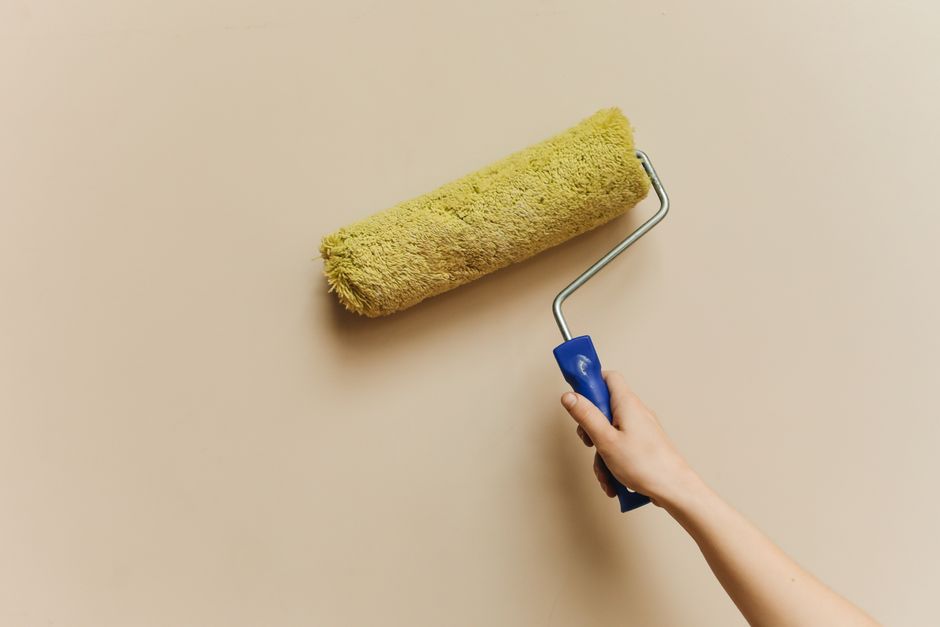
Primer is where most of the bond comes from. A masonry primer is rolled onto bare stucco and every patch, using a thick nap roller so the paint gets pushed into the pits. Spot priming alone leaves flashing, where patched areas show a different sheen under the topcoat, so a full coat of primer on heavily repaired walls is usually worth the extra day.
Topcoat and coverage on rough texture
Rough stucco eats paint. A thick nap roller, or an airless sprayer followed by a back roll, works acrylic latex into the texture, and two coats are standard so the mil thickness builds up enough to resist salt. A flat or low sheen finish hides the small flaws that a glossier sheen would highlight. Trim is cut in last, with caulk at every wood or metal joint.
Why the coating fails sooner at the coast
Salt air pulls moisture into thin coatings and keeps them damp, and the afternoon sun then bakes them. That cycle breaks down cheap paint within a few years. A wall that was washed well, patched with a flexible product, primed and given two full coats of quality acrylic holds up much longer between repaints.